
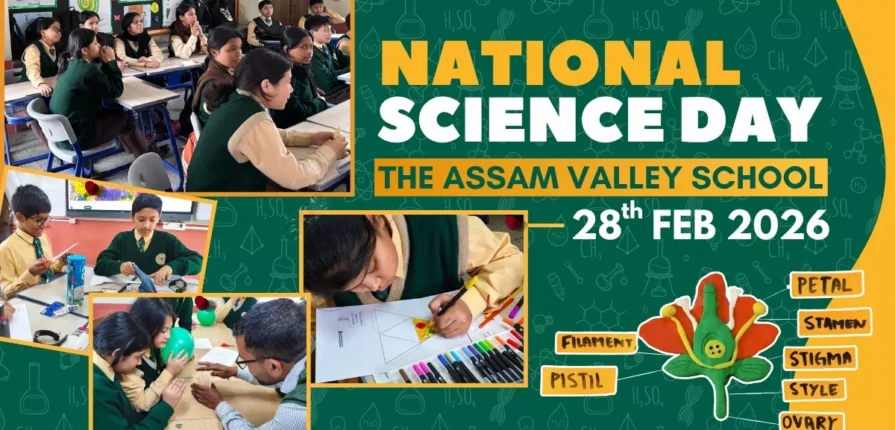
On the 28th of February, The Assam Valley School celebrated National Science Day, commemorating Sir C.V. Raman’s discovery of the Raman effect. Instead of the usual scientific assembly, it was decided that the day would comprise of a series of workshops and technical challenges. The aim was evident: can our students take the principles of physics, biology and maths and apply them in a real-world scenario?
Concentrating the focus on Classes 5, 6, 7, and 8 meant that all the activities were geared towards a specific mental level of the students. The goal was to move beyond the chalkboard and prove that scientific inquiry is a practical, living process.
Class 5: The Logic of the Hunt
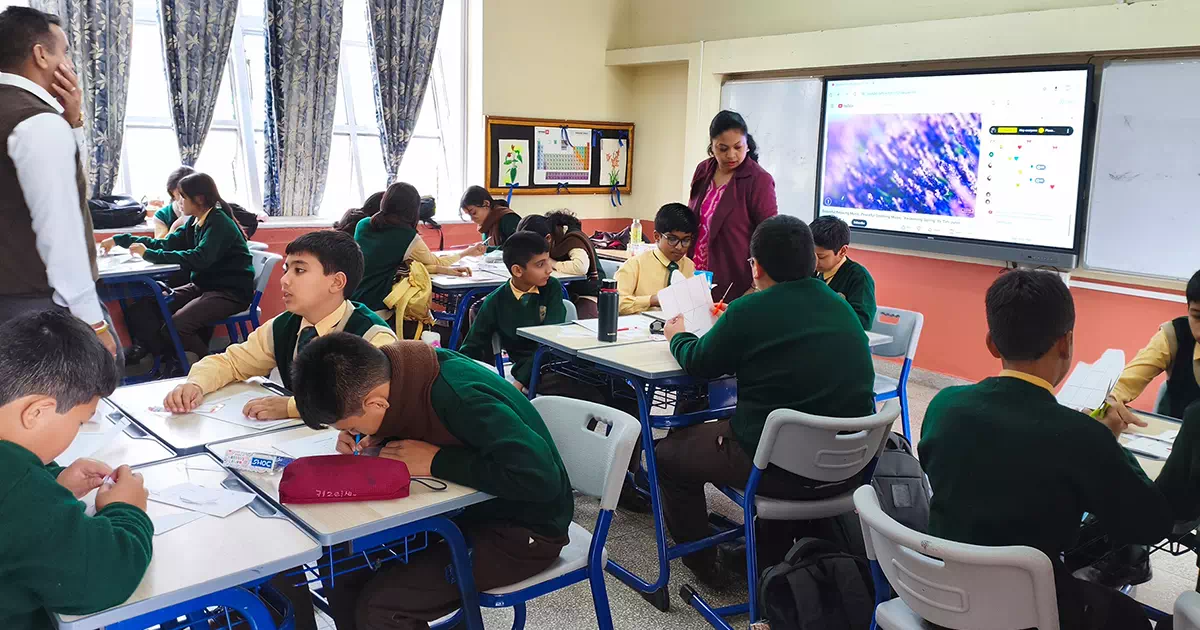
We began Class 5 with a scientific treasure hunt. This was not your typical run around the fields. To get the next clue, these kids had to solve riddles that were embedded in scientific facts. Unless they knew basic biology or could solve a logical problem, they would be stuck.
It was loud, it was competitive, and it was exactly how science should be. You could see groups of three or four kids working together, debating over an answer to some riddle about gravity or plant life. They weren’t learning how to work together; they were actually working together in order to win. By the time they received the final prize, they had exercised more deductive reasoning in one day than they would have during an entire week of lectures.
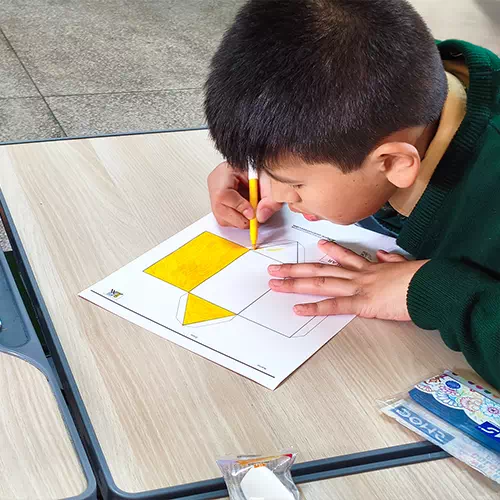
Class 6: Making Math a Physical Thing
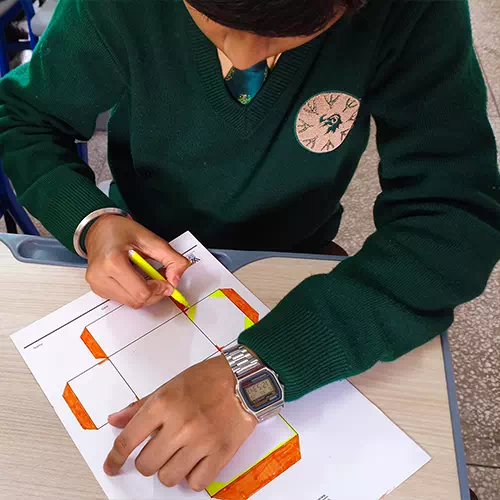
Mathematics, in fact, is arguably the biggest challenge when it comes to visualisation. To overcome this, The Assam Valley School conducted a mathematics model-making session for Class 6. The aim was to ensure that students took abstract formulas and made sense of them in physical form. To create a geometric shape or a model that explains a theorem, students have to be precise. It is a process that requires an actual understanding of concepts.
The students made use of basic materials that could demonstrate how numerical values and ratios play an important role in determining the integrity of physical objects. This helped them realise that while working on a chalkboard they were not only required to implement formulas; but these very formulas were also required to ensure that the integrity of a bridge or symmetry in a building was maintained. At the end of the session, they realised that while they had only managed to write down some entries in a register, it had now become something that they could hold and look at from every angle.
Class 7: Practical Science and Quick Thinking
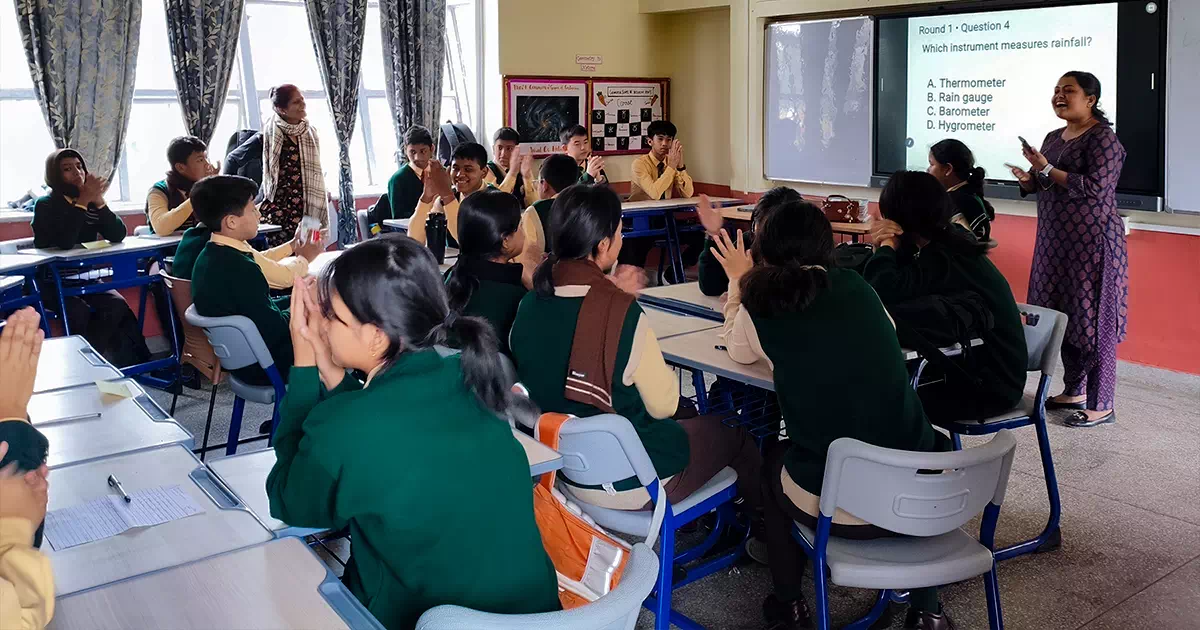
The day for Class 7 was divided into two sections. Firstly, the students participated in the Best Out of Waste project. We always hear about how important it is to take care of the environment, but in this case, it was really put to the test. The students were given the task of using the waste that was already ready to be thrown away and creating something out of it. This meant that they had to look at the waste and use it as a tool that could be of great use to them in solving the problem. Just after that, the students took part in the science quiz.
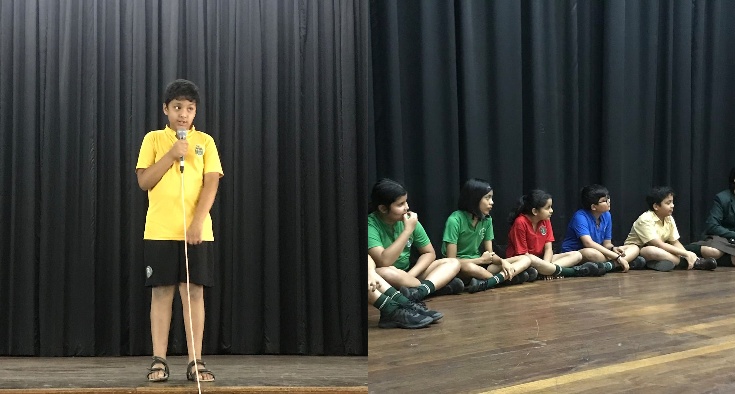
This was really about speed and accuracy. The questions were not just about memorising facts from the book. Instead, the students were tested on how quickly they could think and how they could apply the knowledge they had acquired to different situations. There was really tough competition among the houses. One could hear the students cheering whenever they gave the right answer to a difficult question. This demonstrated that at The Assam Valley School, which is recognised as the best boarding school in Assam, intellectual achievements in science and logic are held in the highest regard.
Class 8: Physics Demonstrations and Biological Studies
The senior students of the Lower School, i.e., Class 8, were assigned the most technical work for the day. This was divided between physics experiments and the making of detailed biology models.
In the Physics section, the students were tasked with demonstrating how scientific laws are applied in real life. A student was not simply required to read about the law of static energy and mechanical forces. He was required to set up the experiment and demonstrate the law. This required a student to explain, in detail, the “how” and the “why” behind an experiment to an audience of his peers. This is a true test of a student’s understanding, taking the experiment from a textbook to a real-world application.
At the same time, the biology students were focused on the finer details of life. They made models of complex systems-like the human circulatory system and DNA strands. These were not just for show; they were precise scientific representations. Making these models demanded a good understanding of how all the parts of a living system work together. In showing off their models, the students demonstrated that they could take complex information and make it simple for others to understand.
Why These Lessons Matter
We celebrate Science Day in this way because we want our students to think for themselves and not just follow what they hear. At The Assam Valley School, we believe that the children of the future who will become engineers and doctors will need more than just passing grades in an exam. They will be successful because they will be able to solve a problem that was never discussed in their textbooks. This event reminded everyone that science is about trial and error. It is about experiments that did not work the first time around, incorrect answers given during a quiz, and models that needed to be rebuilt. That is how real learning takes place.
By the end of the day, every student had a better grasp of the practical side of science. They left the labs with more questions than they came in with. That means they were fully engaged in the day’s activities. We believe that we are the best boarding school in Assam because of moments like these. We believe that it is okay to try something and fail as long as you learn from those mistakes. These students didn’t just hear about Sir C. V. Raman; they spent the day working the way he did.
FAQ
How does The Assam Valley School encourage students who find science difficult?
We use events like National Science Day to take the pressure off. By turning maths into 3D models and science into a treasure hunt, we help students see the subjects as puzzles to be solved rather than just facts to be memorised. This hands-on approach builds confidence in those who might struggle with traditional lectures.
How does being the best boarding school in Assam influence these science events?
As a leading residential school, we have the time and facilities to let students work on long-term projects. National Science Day allows us to use our campus as a giant laboratory where students can learn by doing rather than just reading.
What kind of activities were organised for the younger classes?
Class 5 students participated in a scientific treasure hunt. This was a game where they had to solve science-based riddles to find the next clue. It was a fun way to test their logic and teamwork outside of a classroom setting.
Can students choose between different science subjects during the event?
Yes. For example, Class 8 students were able to choose between experiment demonstrations and biology model making. This allows them to focus on the specific branch of science they are most interested in.
How does the ‘Best Out of Waste’ competition help with science learning?
This activity is actually a lesson in engineering. Students have to look at discarded materials and figure out how to repurpose them into something functional. It teaches them to be resourceful and to solve problems with limited tools.
Are these science activities part of the regular school grade?
While these specific events are part of our National Science Day celebration, the skills the students learn, like model making and public speaking, help them perform better in their regular academic assessments throughout the year.



 WhatsApp
 Student Login
 Register Now